Chimney
Repairs
Cavan
Cracked stacks, failed flashing, spalling bricks, leaking chimney breasts — we diagnose the actual cause and fix it properly. No guesswork, no unnecessary work.
Fully Insured & VAT Registered — Fast Free Quotes
Chimney Repair Work, Done Right
A chimney is a complex piece of masonry that takes a beating from every angle — driving rain from the west, ground frost that opens mortar joints, and thermal cycling from fires below. When something fails, the water finds its way in fast. We cover the full scope of chimney repair work on domestic properties across Cavan, Meath, Navan and Ashbourne.
This is not patching-over problems with silicone and hoping for the best. We identify the root cause — whether that is a failed lead flashing, deteriorated pointing, a cracked pot, a structural crack in the stack, or damp entering the flue — and carry out the correct fix using the right materials for the job.
If your chimney repair is part of a wider roofing project, we can coordinate both together. See our roof repairs in Cavan service for more detail on the broader scope of work we cover, or visit our homepage to see all services.
Every Type of Chimney Repair
Different faults need different fixes. Here is the full range of chimney repair work we carry out in Cavan and across the service area.
Chimney Repointing
We rake out eroded mortar joints to the correct depth, clean the bed and refill with a mortar mix matched to the original masonry. Critical for keeping water out of the brick courses and preventing structural deterioration.
Lead Flashing Replacement
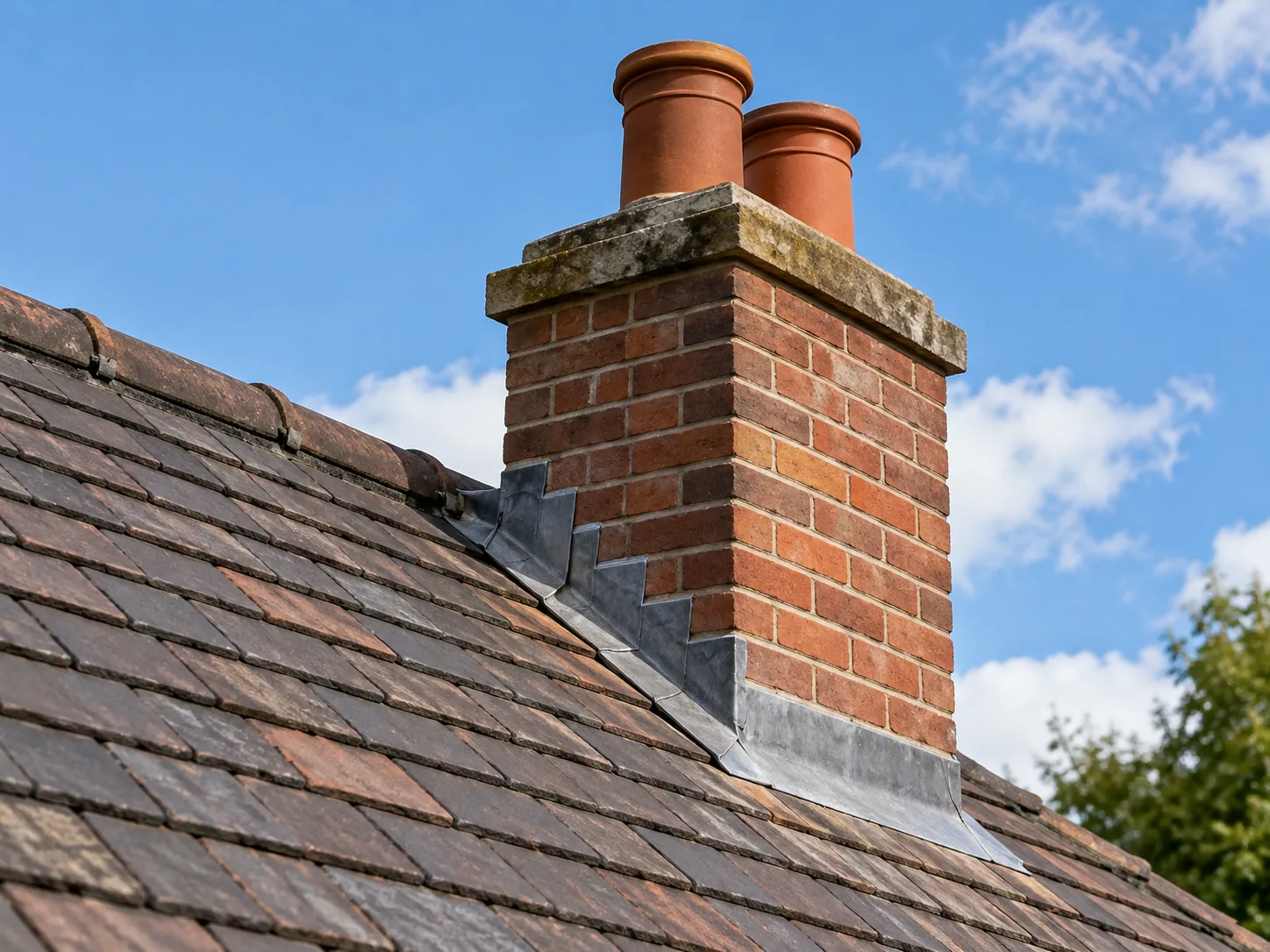
We cut new lead flashing to profile, form it to the slope of the roof covering, and re-chase it into the brickwork with fresh mortar. Failed flashing is the single most common cause of a leaking chimney breast.
Chimney Pot Replacement
Cracked or missing pots allow rain and nesting material directly into the flue. We remove the broken pot, bed a new one correctly in mortar, and finish the flaunching around the base.
Flaunching Repair
Flaunching is the sloped mortar cap that holds the pot and sheds water away from the top of the stack. It cracks with frost and age. We hack off failed flaunching and re-bed it with a durable mortar mix.
Cowl & Cap Fitting
We supply and fit cowls and caps for active and decommissioned flues. A good cowl keeps rain out, stops birds from nesting, and helps maintain draw on a working fire or stove.
Partial & Full Stack Rebuilds
Where the stack has moved, leaned, or the brickwork is beyond repair, we can take it down to a sound course and rebuild. We source matching brick where possible to keep the appearance consistent.
Common Chimney Problems We Fix
Most chimney faults give visible warning signs well before they become structural emergencies. Here is what causes each problem and how we identify it.
Spalling & Eroded Bricks
Frost forces water that has soaked into brick to expand, breaking the face off the brick (spalling). Exposed above the roofline with no shelter, chimney bricks take the worst of every freeze-thaw cycle. Once the brick face fails, water gets in faster and the damage spreads quickly.
Failed Lead Flashing
The lead strip that seals the chimney to the roof is packed into a mortar chase in the brickwork. After years of thermal movement, the mortar crumbles, the lead lifts, and a gap opens up. Rain then tracks down inside the wall, appearing as a damp stain on the chimney breast below ceiling level.
Crumbling Mortar Joints
Pointing between bricks breaks down due to weathering, acid rain, and the high sulphate content in chimney soot attacking the lime or cement mortar. Once joints are open, water soaks in and frost cycles make the problem worse each winter. A chisel pushed into a joint more than 10mm deep is the threshold for repointing.
Cracked Flaunching
The mortar haunching at the top of the stack that holds the pot and slopes water outward shrinks and cracks over time. A cracked flaunch allows water to sit around the base of the pot, saturating the brickwork below and eventually working its way down the stack.
Bird Nesting in the Flue
Jackdaws in particular nest in unguarded chimney pots, blocking the flue completely. A blocked flue is a carbon monoxide hazard on any working fire or stove. We clear the blockage and fit a purpose-made cowl or cap to prevent re-entry.
Structural Cracks & Lean
Stacks built on a deteriorated haunch or with poor original pointing can develop visible vertical cracks or begin to lean. This is a structural issue, not just a cosmetic one. Once a stack is moving, partial or full rebuild is the only safe option. We assess the extent from scaffold level before advising on the correct course of action.
The Chimney Repair Process
Inspection & Diagnosis
We start from the ground with binoculars to assess the stack condition, then access by ladder or scaffold to inspect at close range. We check the flashing, pointing, flaunching, pots, and the condition of the brickwork on all four faces. You get an honest description of what needs doing and why.
Quotation
We provide a written quote detailing the specific repairs required, the materials to be used, and the access method. No hidden costs. If scaffolding is required, it is included in the quote rather than added later.
Safe Access Setup
We erect scaffolding or tower scaffold to the required height and check it is level and secure before any work begins. Working at height safely is non-negotiable — this step is never skipped.
Preparation
Existing failed mortar is raked out to a minimum 15–20mm depth using angle grinders and hand tools. Old lead flashing is removed and the chase is cut clean. Any loose bricks are removed and set aside. The surface is cleaned and dampened before new materials are applied.
Repair & Reinstatement
New mortar is worked into the joints in stages, avoiding over-filling. Lead flashing is cut, formed and chased back in. Flaunching is rebuilt with a proper slope to shed water. New pots or cowls are bedded and pointed in. Where brickwork is being rebuilt, we lay in courses, check for plumb and allow each lift to go off before continuing.
Check & Clean Up
Once the work is complete we inspect each repair from scaffold level before striking the access. We clean down the stack face, remove all debris from the roof and gutters, and leave the site tidy. You get a rundown of what was done and what to expect going forward.
What Goes Into a Proper Chimney Repair
The materials used on a chimney repair matter more than most homeowners realise. Using Portland cement mortar on old soft brick is one of the most common mistakes in chimney repair — it is too rigid, does not allow the stack to breathe, and causes bricks to crack rather than the joint giving way. We assess the existing mortar and brick before selecting the mix.
Materials and equipment we use on chimney repair jobs:
- Code 4 and Code 5 lead sheet for step and cover flashing
- Natural hydraulic lime (NHL) mortar where original is lime-based
- Sand and cement mortar (correctly proportioned) for modern stacks
- Clay and concrete chimney pots — standard and tall-back profiles
- Rotating and static anti-downdraught cowls
- Bird-guard mesh cowls for decommissioned flues
- Matching facing brick sourced to original size and colour where possible
- Angle grinder with mortar raking disc for clean joint preparation
- Scaffold tower or full tube-and-fitting scaffold as required by height
- Lead dresser, bossing mallet and lead snips for accurate flashing work
For chimney work on older Cavan properties — many of which were built with a softer red brick and lime mortar — getting the mortar mix right is essential. Too strong a mix locks moisture into the brick and accelerates deterioration. We have carried out repointing jobs where previous contractors used an overly hard mix, and the bricks have suffered as a result.
What Affects the Cost of Chimney Repairs
Chimney repair costs vary significantly depending on what needs doing, how high the stack is, and what access is required. There is no meaningful way to quote a chimney repair without seeing it — anyone offering a firm price over the phone without an inspection is guessing.
The main factors that affect the price of chimney repair work in Cavan and across Meath are:
- Scope of work: a pot swap and reflaunch is a short job; a full repoint or partial rebuild takes considerably more time and material.
- Stack height and access: a chimney stack on a single-storey bungalow requires a scaffold tower; a four-storey stack needs a full scaffold — the access cost is a significant part of the total.
- Number of stacks: if two or three stacks need work, scaffolding costs can be shared across jobs, reducing the per-stack price.
- Extent of repointing: repointing all four faces of a stack costs more than addressing only the two exposed faces, but may be the right decision to avoid returning within a few years.
- Lead flashing type: step flashing with a separate cover flashing (the correct method) uses more lead and more labour than a cheaper one-piece detail.
- Brick matching: sourcing matching facing brick for a rebuild adds cost but produces a far better result, especially on older or distinctive brickwork.
- Combination with other roof work: if the chimney repair is done alongside roof repairs or gutter repairs, scaffolding is already in place and the overall cost per job is lower.
We provide a free written quote after inspection. The quote breaks down exactly what is included so you can compare fairly. See our guide on how much roof repair costs in Ireland for broader context on roofing costs.
Get Your Free Quote
Why Choose Falcon Roofing and Building
Fully Insured & VAT Registered
Every job is covered. We are fully insured for chimney and roofing work and VAT registered — so your quote is transparent and you have proper cover if anything unexpected arises.
Root Cause, Not a Patch Job
We find out why the chimney is failing before we touch it. Applying silicone or a sealant over a failed flashing or open joints buys a year at best. We fix the actual problem so you are not calling someone back in 18 months.
Written Quotes, Clear Pricing
Your quote sets out exactly what work is being done, what materials are being used, and what access is required. No surprises when the invoice arrives.
Local to Cavan & Meath
We are based in Cavan and work across Meath, Navan and Ashbourne regularly. We know the local property stock, the typical build periods, and the conditions the buildings face. A quick response is straightforward because we are not travelling from the other end of the country.
Tidy, Respectful Work
Chimney work generates a lot of debris — mortar dust, broken brick, old lead. We contain it, remove it, and leave the roof and surrounding area clean. Your gutters and garden are checked before we leave.
Fast Free Quotes
Call or message us and we will arrange an inspection promptly. Quotes are free, with no obligation. We aim to get back to every enquiry quickly — chimney leaks cannot wait for a three-week queue.
Chimney Repair FAQs
Real questions we get from homeowners in Cavan, Navan and Ashbourne before booking chimney repair work.
How do I know if my chimney needs repointing?
The clearest signs are crumbling or recessed mortar between the bricks, staining on the chimney breast inside, damp patches on the ceiling around the chimney, or visible cracks in the stack from ground level. Older Irish properties often have lime mortar joints that soften and erode over decades — once you can push a key a centimetre or more into the joint, repointing is overdue.What causes a chimney to leak in Cavan?
The most common cause is failed lead flashing at the base of the stack where it meets the roof slope. After 20–30 years, lead can crack, lift or pull away from the mortar chase. Eroded pointing, a cracked chimney pot, or a missing cowl that allows rainwater straight down the flue are also frequent culprits. Cavan's wet climate and frost cycles accelerate all of these.Can a chimney be repaired without full scaffolding?
For minor repairs at low eaves height, a tower scaffold or safe ladder access may be sufficient. For a full stack repoint, flashing replacement or any structural work above the ridge line, a full scaffold is required by law and for safe working. We assess access requirements during the initial inspection and include scaffolding costs in your quote.How long does chimney repointing last?
A properly executed repoint using the correct mortar mix for the original brickwork should last 25–40 years. Using a mortar that is too hard — Portland cement on old soft brick — can cause the bricks themselves to crack, so matching the mix to the masonry is critical. We assess the existing mortar and select the appropriate mix before starting.Is it worth repairing an old chimney or should I have it removed?
If the flue is still in use — for a stove, open fire or boiler — repair is the right route. If the chimney is decommissioned and purely decorative, repair is usually still worthwhile to prevent water getting into the stack and damaging the roof structure below. Full removal is a bigger structural job and is rarely the cheapest option once scaffolding, roof repairs and internal making-good are factored in. We can advise on the most cost-effective approach for your situation.What is lead flashing and why does it fail?
Lead flashing is the strip of lead sheet that seals the joint between the chimney stack and the roof covering. It is shaped to overlap the tiles or slates and is fixed into a mortar chase cut into the brickwork. Over time the mortar chase opens up, the lead lifts in frost, or the lead itself develops stress cracks from thermal expansion. Once it loses its seal, rainwater tracks straight down the back of the chimney breast.Do you carry out chimney repairs in Navan and Ashbourne as well as Cavan?
Yes. Falcon Roofing and Building covers Cavan, Meath, Navan and Ashbourne for all chimney repair work, including repointing, flashing, pot replacement and full stack rebuilds. Call us for a fast free quote anywhere in our service area.What is the difference between a chimney cap, pot and cowl?
A chimney pot is the clay or concrete flue terminal fitted to the top of the stack. A cap or cover sits over the top of the pot and can be removed. A cowl is a rotating or static ventilated cover that fits onto the pot — it keeps rain out, improves draw and prevents birds nesting in the flue. All three can be replaced independently; if a pot has cracked or a cowl has blown off, that alone can cause significant water ingress.
Chimney Leaking?
Call Today.
Fast free quotes across Cavan, Meath, Navan and Ashbourne. Fully insured. No call-out fee for the inspection.